This animation is a compliation of the previous 2 animations, taken from the perspective of one of the actors. The focus in this being the framing and movement of layers and the manipulation of space between the movement of the two actors.
Saturday, March 31, 2012

Sunday, March 11, 2012
...on Spatial and Temporal Sequencing cont.
This second animation looks at the interaction of layers and how they begin to form part of the sequence that makes up the scene from Cabaret.
...on Spatial and Temporal Sequencing cont.
...on Spatial and Temporal Sequencing
Project 2a is based on the interpretation of spatial and temporal sequence found within a movie clip. My analysis is based on a clip from the movie Cabaret titled "Money". In this scene we see a stage performance. In breaking down the movements and the framing of the field, there are two sequences that stand out. First is the movement between the two actors. The second sequence is composed of the layers used to frame the field and the actors, as well as how the actors interact with layers themselves.
 The movement of the actors and the spaces and sequences created between them as a result are reinterprated in this rendering.
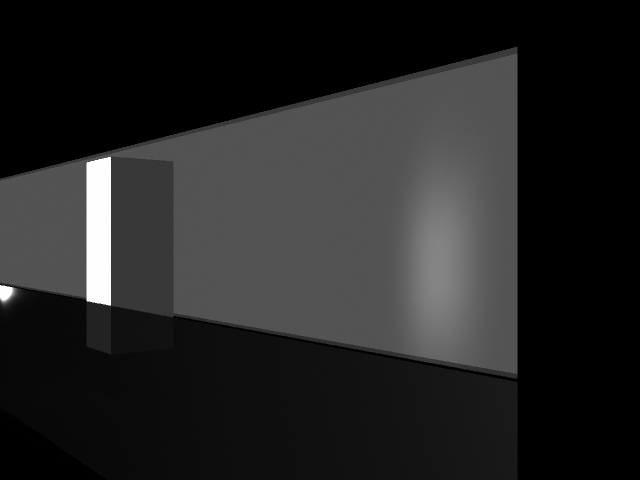 This rendering of the animation consists of the layers at the start of the animation.
 The procedure of the animation is layed out in this compilation of renderings. By layering the different moments of interaction one begins to understand how through time a choreography is established.
Tuesday, March 6, 2012

Sunday, February 19, 2012
...on pattern design


Looking closer at trying to connect the changes within the handle.

Different patterns compiled.
Courtesy of dezignus.com
Saturday, February 18, 2012
...on the topic of incohate
Incohate: an experiment in architectural education calls into question the finality of the work architects do. In a very broad essence our built work is finite (especially to the public); when the building stands done and occupied the architect's work has come to an end. However for the architect the work constantly remains in an incohate state, never truly satisfied, always looking for a means to improve the work. Yet as architects we are forced eventually to call an end to our projects. This is done for clients however and not ourselves. This also applies to education no matter the field. There is always something more to discover, experience, learn. We learn by doing, by experimenting, and by observing. Change is something we face on many levels and by embracing that life itself can be considered incohate, we become more free to explore all there is of the world to offer. We as people are never done till our bodies themselves give out.
Versioning: evolutionary techniques in architecture questions the relationship of surface, form, and their links to space. Surface as a form in architecture is a goal that a number strive to reach. The question that arises from this is whether the space beneath the surface should be linked or not. In some cases a structure may have an organic surface, but the space within rectilinear. But should the space created not be just as organically linked to its corresponding surface? In some cases this has been a successfull endeavor, in which the space reads as organic as its corresponding structure/surface. However many times as well the fall back to classical orthogonal spaces is designed and a disconnect between the two occurs.
Versioning: evolutionary techniques in architecture questions the relationship of surface, form, and their links to space. Surface as a form in architecture is a goal that a number strive to reach. The question that arises from this is whether the space beneath the surface should be linked or not. In some cases a structure may have an organic surface, but the space within rectilinear. But should the space created not be just as organically linked to its corresponding surface? In some cases this has been a successfull endeavor, in which the space reads as organic as its corresponding structure/surface. However many times as well the fall back to classical orthogonal spaces is designed and a disconnect between the two occurs.
Subscribe to:
Posts (Atom)